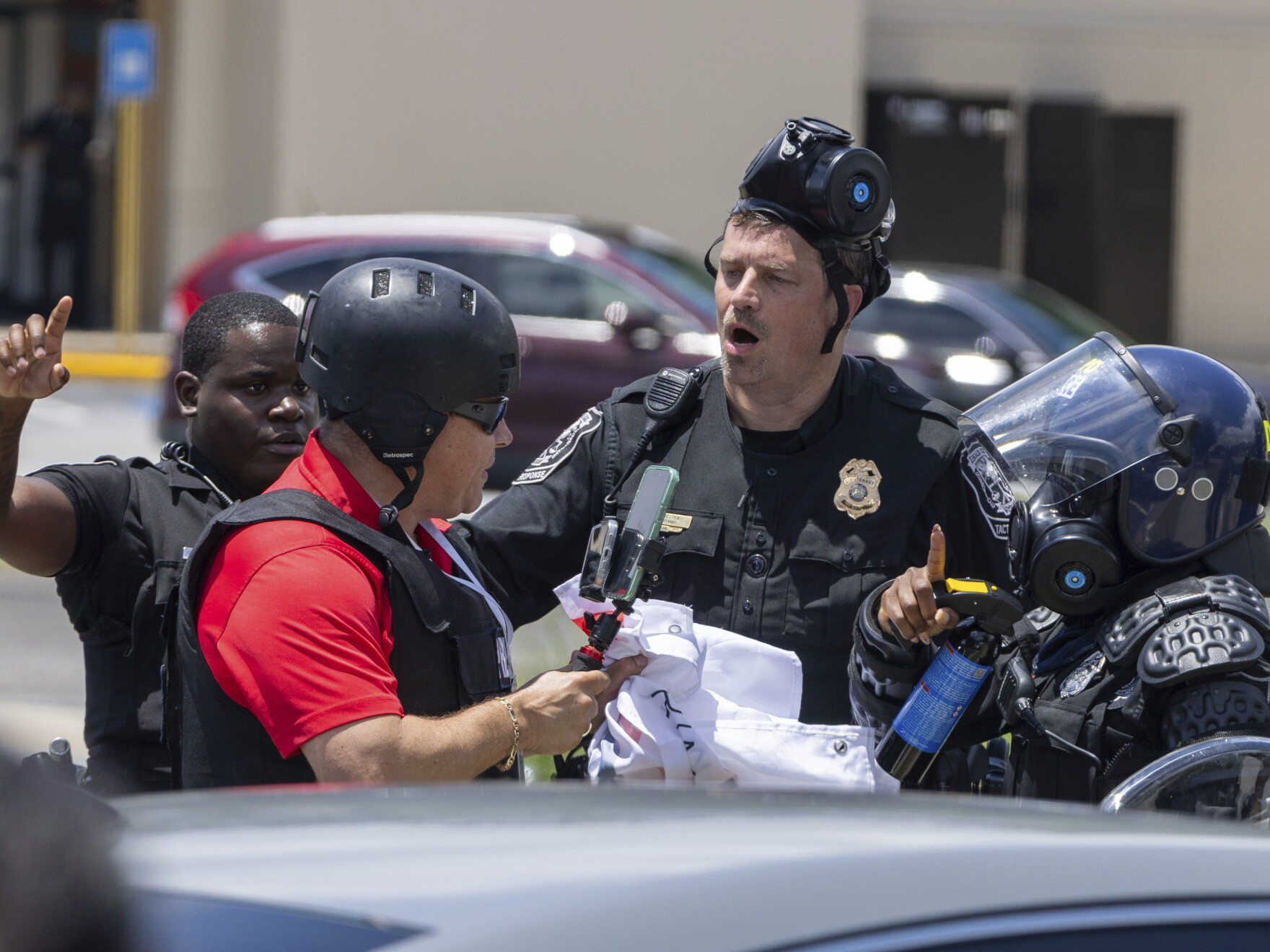

Spanish-language journalist Mario Guevara has spent more than 100 days in custody after police arrested him while he livestreamed a protest near Atlanta. Local prosecutors dropped every charge and an immigration judge ordered his release on bond, but ICE continues to hold him as the federal government moves to deport him to El Salvador.
Guevara was reporting on a “No Kings” demonstration in DeKalb County, Georgia, on June 14, 2025, when officers ordered him to move and then arrested him. Video showed him wearing a red shirt and protective vest marked “PRESS,” carrying reporting equipment and repeatedly identifying himself as a member of the media.
For roughly two decades, Guevara has covered immigration and the Atlanta area's Latino community. He worked for the Spanish-language newspaper Mundo Hispánico before founding MG News, a digital outlet whose livestreams frequently document police and immigration-enforcement activity.
The charges disappeared, but the custody continued
DeKalb County police accused Guevara of obstruction, unlawful assembly and being a pedestrian in the roadway. He was booked into local jail, where an ICE detainer prevented his release. DeKalb County prosecutors dismissed all three charges, and prosecutors later dropped separate traffic-related allegations filed in neighboring Gwinnett County.
The end of the criminal cases did not free him. Local officials transferred Guevara to ICE, which has moved him repeatedly between detention facilities. As of September 25, he is being held at the Folkston ICE Processing Center in southeastern Georgia, more than four hours from his family.
His lawyers say Guevara entered the United States legally in 2004, sought asylum the following year and has held authorization to live and work in the country while pursuing immigration relief. His adult son is a U.S. citizen, and Guevara has a pending path to seek lawful permanent residence.
ICE blocks a bond order
On July 1, an immigration judge ordered Guevara released on bond. The federal government appealed and obtained a stay, keeping him confined while the Board of Immigration Appeals considered the case. In opposing his release, the government argued that his practice of filming and livestreaming law-enforcement activity made him a danger to the community.
That position alarmed press-freedom advocates. Recording police in public is a routine act of newsgathering protected by the First Amendment. The Committee to Protect Journalists, the ACLU and other organizations argue that using Guevara's reporting as a reason for continued detention punishes constitutionally protected journalism and warns other noncitizen reporters away from documenting immigration enforcement.
A final removal order and an emergency legal fight
On September 19, the Board of Immigration Appeals reopened Guevara's long-dormant immigration proceeding, dismissed his earlier appeal and treated a 2012 decision denying asylum as a final removal order. The ruling also made the government's bond appeal moot, cutting off the release that the immigration judge had authorized.
Guevara's legal team is seeking emergency relief in federal court. On September 24, his lawyers again asked for an order preventing his removal and requiring ICE to release him while a pending First Amendment challenge proceeds. They argue that deporting him before the court resolves that case would allow the government to complete the retaliation the lawsuit was brought to stop.
ICE and the Department of Homeland Security deny that Guevara is being targeted for his journalism and say the government is enforcing an immigration order. His attorneys answer that the sequence cannot be separated from his reporting: he entered custody through an arrest made while covering a protest, every criminal allegation was abandoned, and the government then relied on his filming of law enforcement to justify keeping him detained.
A press-freedom case with an imminent deadline
Guevara now faces removal to El Salvador at any time. The legal question is larger than his immigration status. Reporters covering demonstrations routinely stand near police lines, follow crowds and record arrests. If those ordinary reporting activities can initiate custody and later be cited as evidence of dangerousness, noncitizen journalists face a distinct threat whenever they document contentious government action.
As of September 25, Guevara remains imprisoned, separated from his family and fighting both detention and deportation. NPPC's Mario Guevara profile records the case and will follow the pending court proceedings.