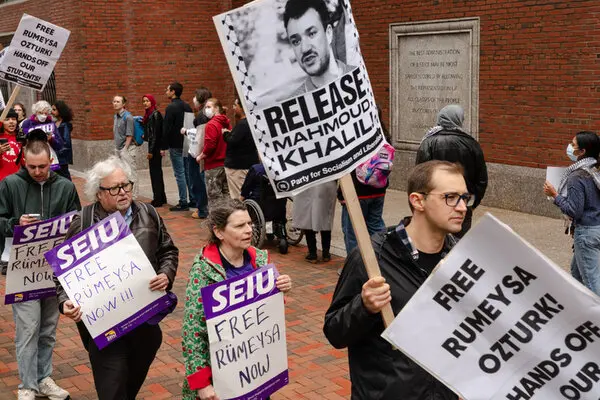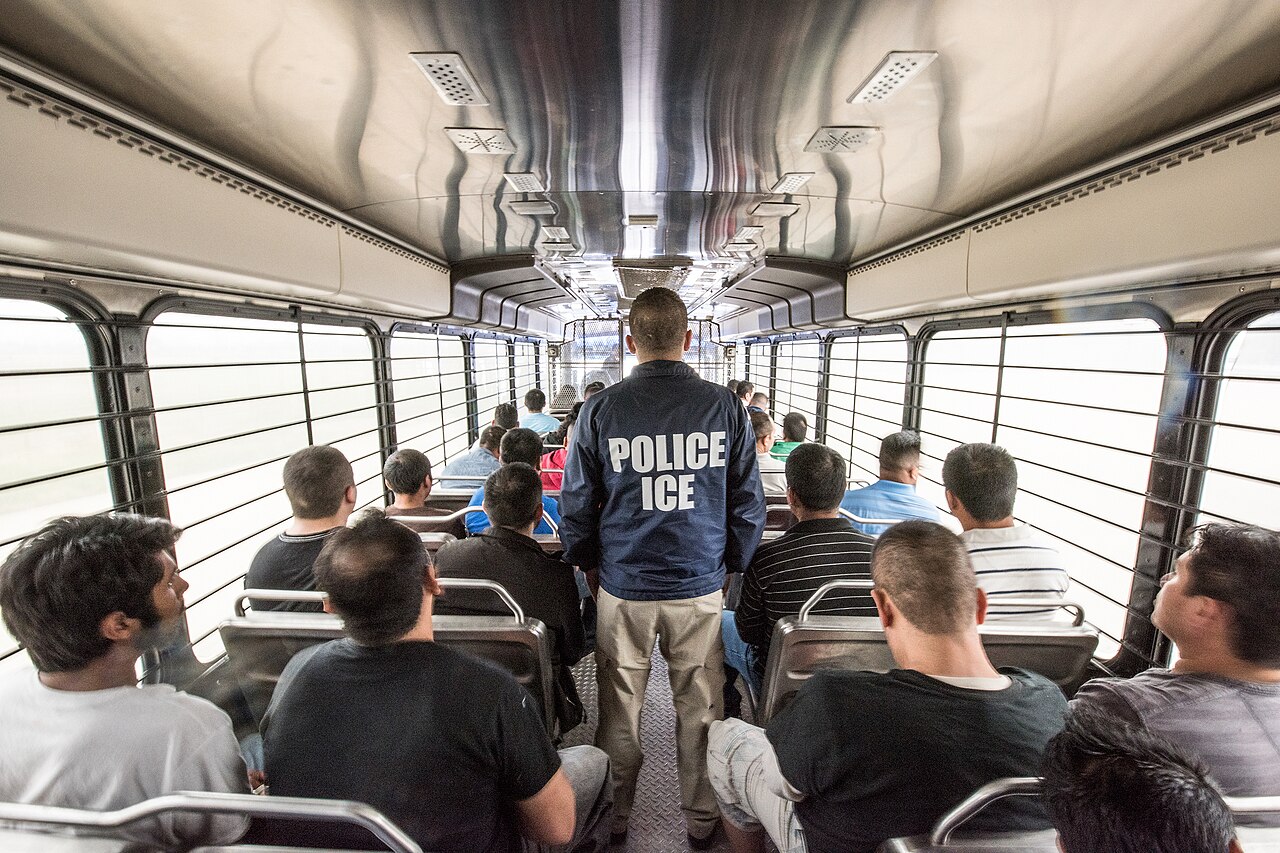

A protest arrest can end when a criminal case is dismissed. For a noncitizen, the same encounter can begin a second process: immigration detention, a fight over the right to remain in the country, and possible removal. When officials use that process to penalize political expression, immigration enforcement becomes a means of excluding people from public life.
Policy brief • October 1, 2026 • Research cutoff: October 1, 2026
Key Findings
The strongest evidence of political repression is evidence connecting an enforcement decision to a protected viewpoint: an official instruction, the reasons recorded in an agency file, or a judicial finding after contested proceedings. Detention after a protest is a reason to investigate that connection, but timing alone does not establish it.
In AAUP v. Rubio, a federal district court found after trial that officials pursued an impermissibly viewpoint-discriminatory policy against noncitizen students and faculty engaged in pro-Palestinian advocacy. That finding moves the discussion beyond a collection of untested allegations. The litigation remains contested on appeal; the court’s January 2026 remedy and the appellate stay of one special remedy must be reported separately.[1][2]
- Physical release and immigration security are separate outcomes. A person may leave detention while still facing removal, renewed detention litigation, or restrictions affecting study and work.
- Bond is an order, not proof of release. Appeals, stays and the ability to pay can keep a person confined after a favorable decision.
- Citizenship changes the available sanction. Citizens can face arrest and prosecution, but immigration removal is not a lawful penalty for a citizen’s political activity.
- Judicial access is a central policy question. The 2026 appellate disagreement concerns when a district court can hear a retaliatory-detention claim, not merely whether a protester eventually wins a removal case.
Scope, Method and Limits
This is a documentary review of six identifiable noncitizens: Mahmoud Khalil, Rümeysa Öztürk, Mohsen Mahdawi, Badar Khan Suri, Leqaa Kordia and Mario Guevara. They were selected to examine different statuses and activities—permanent residence, student or research visas, disputed immigration status, campus organizing, published advocacy and journalism. The brief uses statutes, court orders and filings, legal representatives’ case records, and human-rights and press-freedom documentation. It includes no new interviews.
The sample is purposive. It does not represent every immigration detainee, every political tendency, or every allegation of retaliation. Counsel’s claims are attributed as claims; an agency’s accusation is not treated as a proven fact. A court’s interim release decision is not described as a final ruling on every constitutional issue. The case tracker records the latest material reviewed, rather than certifying that every docket has been exhausted through the cutoff date.
“Political repression” is used here as an analytical category: state action directed at suppressing or penalizing protected expression, association or participation. It is not a statutory immigration status. Evidence of repression can coexist with a genuine dispute about a person’s immigration eligibility. The policy question is whether officials would have made the same detention decision without the person’s political activity.
How Immigration Enforcement Becomes a Speech Sanction
Three decisions require separate scrutiny: whether a person is legally removable, whether detention is authorized and necessary, and why that person was selected for enforcement. An immigration violation does not itself answer the third question. Conversely, a retaliation allegation does not erase every potentially valid immigration ground.
The foreign-policy removal provision, 8 U.S.C. § 1227(a)(4)(C), gives the Secretary of State a role in assessing adverse foreign-policy consequences. It incorporates exceptions from § 1182(a)(3)(C). For ordinary noncitizens, lawful beliefs, statements and associations receive statutory protection unless the Secretary personally makes the specified compelling-foreign-policy-interest determination. This exception is a particularly consequential point of discretion: an executive assessment can place lawful political expression inside a removal dispute.[3][4]
Detention is a further exercise of power. Section 1226(a) provides a discretionary detention-and-release framework, while other provisions impose mandatory detention in defined circumstances. The brief does not assume that everyone has the same eligibility for an immigration bond hearing. Each custody decision must identify the actual statutory authority, the individual facts and the legal basis for denying release.[5]
A noncitizen defending against removal generally has a statutory right to representation at no government expense. That differs from the appointed-counsel protections available to qualifying defendants facing criminal imprisonment. A nominal opportunity to challenge detention can therefore depend on finding counsel, financing the case, and maintaining contact after a transfer.[6][25]
These mechanisms can produce a chilling effect before any final deportation. A student deciding whether to sign an op-ed must consider the possibility of losing access to a degree program and being separated from family. A journalist deciding whether to film an operation must consider a second custody system that can outlast the criminal case. The severity lies in the combination of consequences and uncertainty, rather than solely in the ultimate removal decision.
Case Tracker: Six Distinct Paths Through Custody
Reading the table: Dates identify detention and documented release or deportation events. “Not established” means the reviewed evidence does not supply that outcome. Visa revocation, termination of a student record, loss of status, a removal order and an executed deportation are different events.
| Person and activity | Custody and release | Bond / habeas | Immigration outcome |
|---|---|---|---|
| Mahmoud Khalil Columbia protest negotiator; lawful permanent resident | Detained March 8, 2025; released June 20, 2025. | Federal release order. Third Circuit rejected district-court jurisdiction January 15, 2026. | Release did not terminate the removal dispute. A student-visa revocation is not the relevant mechanism for a permanent resident.[7][8][9] |
| Rümeysa Öztürk Tufts doctoral student; co-author of an op-ed | Detained March 25, 2025; released May 9, 2025. | Federal court ordered release; separate litigation addressed her student record. | Visa revoked March 21; SEVIS record terminated after her March 25 arrest. After completing her doctorate, returned to Türkiye under an April 2026 settlement resolving outstanding litigation; distinguish that return from deportation.[10][11][29] |
| Mohsen Mahdawi Columbia organizer; lawful permanent resident | Detained April 14, 2025 at a naturalization appointment; released April 30. | Released on federal bail. July 21, 2026 panel ruling rejected jurisdiction; subsequent en banc review noted in September filing. | No executed deportation established in the reviewed record. The panel ruling did not adjudicate the merits of the speech claim.[12][13][14][17] |
| Badar Khan Suri Georgetown scholar; speech and family associations | Detained March 17, 2025; released May 14. | Released on bond; Fourth Circuit affirmed July 23, 2026. | Government continued seeking reversal and filed Supreme Court petition September 21. A petition is not a Supreme Court ruling.[15][16][18] |
| Leqaa Kordia Protest participant; government alleged a status violation | Detained March 13, 2025; actual release March 16, 2026. | $100,000 bond. District court later dismissed habeas action without prejudice as moot. | Release did not establish permanent status or terminate removal proceedings. Her earlier protest charges were dismissed.[19][20] |
| Mario Guevara Journalist documenting immigration enforcement | Arrested June 14, 2025; later transferred to ICE. Deported October 3, 2025. | $7,500 immigration bond granted; DHS appealed and he remained detained. | Deportation to El Salvador confirmed. His lawyers disputed the immigration basis; the government asserted danger and challenged bond.[21][22][23] |
The Student Cases: A Speech Claim Is Also a Custody Claim
Öztürk’s case shows why restoring one form of liberty does not repair every consequence. Her release allowed her to resume academic life, but litigation over her student record and immigration proceedings continued. The April 2026 settlement and her return after completing a doctorate provide a materially different endpoint from the initial release. A tracker that stops in May 2025 would miss that distinction.[11]
Khalil and Mahdawi show another distinction: permanent residence does not eliminate exposure to politically charged removal decisions. Their legal challenges concerned the use of immigration power against speech and organizing, rather than simply the cancellation of student visas. Their release orders and subsequent jurisdiction rulings belong in separate columns. Losing access to a particular court does not establish that an agency’s account of the person’s conduct was correct.[8][9][14]
Kordia: A Year of Detention, Then a Mootness Dismissal
The March 19, 2026 district-court opinion confirms that Kordia was released March 16 after an immigration judge set $100,000 bond and the government did not invoke the automatic stay within the applicable period. The court dismissed her habeas action as moot, without prejudice. That disposition should not be recorded as a merits finding that her detention was lawful. Nor should the bond order be mistaken for a grant of lawful permanent residence.[20]
Guevara: The Criminal Case Ends, Immigration Custody Continues
Guevara’s reporting made law-enforcement operations visible to a large audience. CPJ documented the government’s opposition to his release, including its characterization of his recording activities as a danger. The DHS bond appeal is important contrary evidence: it identifies the government’s stated justification, which must be examined rather than omitted. Amnesty’s outcome notice confirms his deportation. The case illustrates how loss of a journalist’s presence can silence a source of reporting even when press-freedom groups continue contesting the government’s rationale.[21][22][23]
Case Histories: Decisions That Changed the Course of Detention
Khalil: Two Proceedings, Conflicting Orders
The sequence in Khalil’s case shows why a custody tracker needs more than a final label. According to counsel’s July 2025 chronology, Judge Michael Farbiarz’s June 11 order found the government’s use of the foreign-policy ground likely unconstitutional. A separate June 20 order secured release. An immigration judge nevertheless issued a foreign-policy removal decision that day; Farbiarz subsequently clarified his injunction, and the Third Circuit declined the government’s July request to suspend release. These were interim decisions, followed by the adverse jurisdiction ruling in January 2026 already recorded above.[32]
For policy evaluation, each order answers a different question. Protection against one removal ground is not an entitlement to remain indefinitely. A release decision determines immediate liberty but does not automatically decide eligibility for immigration relief. Conversely, an agency’s removal decision does not necessarily settle the lawfulness of detention. Public reporting that collapses these decisions into “won” or “lost” obscures the institutional conflict and the period of uncertainty the person experienced.
Öztürk: Access to a Court Preceded Access to Freedom
Öztürk’s transfer dispute became a separate obstacle before the release hearing. On May 7, 2025, the Second Circuit ordered compliance with the district court’s direction to move her from Louisiana to Vermont. Her lawyers reported that they had initially been unable to locate her for nearly a day and described worsening asthma and difficulties obtaining care. Those health accounts came from counsel and court filings. The transfer decision did not itself end detention; the bail hearing followed on May 9.[33]
This sequence identifies a practical failure point. A judicial remedy depends on reaching a court capable of hearing the claim and establishing communication with counsel. A person should not have to win a transfer dispute before the necessity of custody can be tested. The case also distinguishes the time needed to obtain release from the time needed to restore academic participation: the latter required a different proceeding. An oversight record should therefore preserve both timelines, rather than use physical release as the end of all harm.
Mahdawi: A Citizenship Appointment Became an Enforcement Encounter
Mahdawi’s arrest at a naturalization appointment is significant because it took place within a process through which a permanent resident was seeking greater legal security. The arrest and April release are documented above. The policy issue is the reliability of access to an administrative process: people who are invited to pursue a lawful benefit need to know whether the appointment is also being used to execute a custody decision. That question can arise even when an agency has authority to initiate removal proceedings.
A safeguard should require a recorded, individualized custody justification and supervisory review when enforcement is planned at an application interview. It should not promise immunity from genuinely lawful enforcement. It should make officials account for why detention, at that location and time, was necessary, and preserve evidence showing whether political activity affected the selection. Without that record, subsequent review can become an argument over public statements while the underlying decision sequence remains inaccessible.
Suri: Transfers Altered the Geography of the Legal Fight
In May 2025, Suri’s lawyers described movement through five facilities in three states within four days, including Louisiana and Texas. The Virginia district court retained his habeas case, rejecting the government’s proposed change of venue. Counsel attributed the rapid transfers to an effort to obstruct judicial access; the court’s reasoning addressed the unusual interstate movement. That procedural history is separate from the later release and appellate decisions.[34]
The institutional lesson does not depend on proving the purpose of every transfer. A system can impose minimum notice and communication duties even when a move is justified by capacity or safety. Review should examine the asserted operational reason, who authorized the transfer, whether counsel received notice, and whether the move changed access to pending proceedings. The government’s logistical explanation belongs in the record alongside the detainee’s account. A transfer policy assessed only by bed availability misses these legal consequences.
Kordia and Guevara: Favorable Bond Decisions Were Not Enough
Contemporary reporting on Kordia’s March 2026 release identifies three bond rulings: the government challenged the first two, and actual release followed the third. This describes repeated favorable decisions within continuing custody, not three separate releases. The distinction is essential when judging whether review worked promptly.[35]
Guevara’s record presents a different endpoint: a grant of bond, a government appeal and stay, continuing detention, and deportation. Together, the two cases show that bond review has several stages—eligibility, the decision, an appeal or stay, affordability, and execution. Reform that changes only the first hearing can leave later barriers intact. An audit should identify which stage caused each day of continued custody; it should not treat all post-order detention as having the same explanation.
What Changes When the Person Is a Citizen?
The relevant comparison is the treatment of the underlying activity, followed by the additional consequences available through immigration law. Citizenship does not immunize a protester against excessive force, arrest, detention or a prosecution. It does remove the lawful option of expelling that citizen through immigration proceedings.
| Conduct or allegation | Citizen | Noncitizen |
|---|---|---|
| Publishing criticism or joining lawful advocacy | First Amendment dispute; no immigration status to revoke. | The same speech rights issue can accompany visa, student-record or removal decisions. |
| Arrest for alleged obstruction or unlawful assembly | Criminal bond, prosecution and dismissal determine that custody track. | Criminal release can be followed by an immigration detainer and a separate custody track. |
| Charges dismissed or acquittal | The disposition resolves those charges; other valid proceedings may still exist. | That disposition does not automatically resolve immigration charges or obtain release. |
| Demanding judicial review | Review follows the relevant criminal or civil process. | Habeas, immigration appeals and petitions for review may raise different jurisdiction questions. |
A concrete, limited comparison is Brad Lander’s June 17, 2025 arrest after linking arms with a person immigration agents sought to detain. He was released within hours; officials alleged interference and considered criminal charges. Guevara’s case also began with an allegation concerning law-enforcement activity, but developed into prolonged immigration custody and deportation. These are comparable categories of confrontation, not the same incident or a controlled experiment.[24]
Lander’s public office and access to political support are major confounders. This brief therefore does not attribute the entire difference in detention length to citizenship. A stronger comparative study would pair people arrested at the same event for the same alleged offense, then account for criminal history, actual conduct, residence, prior immigration proceedings and access to counsel. Until those data exist, the supportable finding is an additional legal exposure, not a measured citizenship penalty.
Comparative Evidence: What Counsel Studies Establish
A national study by Ingrid Eagly and Steven Shafer examined more than 1.2 million removal cases decided between 2007 and 2012. Only 37 percent of people obtained representation; the rate among detained people was 14 percent. Among detained people who had custody hearings, the reported release proportions were 44 percent with counsel and 11 percent without. These are historical, observational comparisons, not estimates of the outcomes of the six political-expression cases in this brief.[30]
Vera’s 2017 evaluation of the New York Immigrant Family Unity Project examined a publicly funded defense program for detained, low-income people at Varick Street Immigration Court. Its comparison baseline was a 4 percent successful-outcome rate for unrepresented detained cases before the program. The evaluation projected a 48 percent successful-outcome rate for program clients. That projection should not be rewritten as a completed national experiment or a guaranteed result for future clients.[31]
These findings support a narrower conclusion than a claim that lawyers eliminate repression. Representation materially changes the ability to identify a defense, seek a custody hearing, assemble evidence and pursue review. Access to counsel is therefore part of an effective remedy, rather than merely an optional service after a detention policy has been evaluated. Neither study isolates political motivation, compares citizens with noncitizens at the same protest, or establishes the present national representation rate.
| Question | Evidence in this brief | What remains unresolved |
|---|---|---|
| Was enforcement linked to viewpoint? | Trial findings in AAUP; individual filings and stated enforcement reasons. | The selection process in every unreviewed case. |
| Does counsel affect access to relief? | Historical national comparisons and Vera’s program evaluation. | The effect size for current politically targeted detainees. |
| Do citizens receive different treatment for the same conduct? | Different legal exposure; an illustrative citizen case. | A matched, same-event estimate of detention and case outcomes. |
| Does a release order secure liberty? | Documented bond, stay and actual-release sequences. | National frequency and duration of post-order custody. |
A Stronger Citizen Comparison Requires Linked Records
The next comparative study should begin with an event, rather than a list of prominent detainees. Include everyone arrested at selected demonstrations or reporting encounters, identify the alleged conduct, and follow each person across criminal and immigration systems. Compare people accused of materially similar acts within the same event. Keep citizenship, immigration status, prior orders, criminal history and access to counsel as separate variables.
The principal outcomes should be time to first independent custody review, time to actual release, criminal disposition, subsequent ICE custody, status action and executed removal. Report both median duration and the distribution: a small number of very long stays can disappear inside an average. Record ongoing cases as ongoing, rather than assigning them a release date or dropping them because they have not finished.
A comparison also needs a way to identify people who were never arrested. Enforcement may target a noncitizen speaker while a citizen who published the same argument faces no proceeding at all. Restricting the sample to arrests would miss that selection stage. With participants’ consent, researchers should examine shared publications or organizing roles and ask whether political exposure predicts referral or status action. Personal identifiers and sensitive affiliation records should not be released publicly.
Even a carefully matched study would not mechanically prove motive. Different immigration histories can create valid differences in available proceedings. The stronger design combines outcome analysis with documentary review of why officials selected a person and why custody continued. A large disparity is a signal for investigation; a recorded viewpoint-based directive is different evidence. Both are useful, but they answer different questions.
Habeas Review: When a Remedy Arrives Matters
The government argues that § 1252 channels claims arising from removal through immigration proceedings and eventual review in a court of appeals. People alleging retaliation argue that unlawful confinement is a present injury requiring a present remedy. Deferring review of that injury until the removal process ends can leave months of lost liberty beyond repair.[28]
The Third Circuit’s Khalil ruling and the Second Circuit’s July Mahdawi panel ruling restricted district-court review in those cases. The Fourth Circuit reached a different conclusion in Suri. The government’s September 21, 2026 Supreme Court petition seeks to resolve that disagreement; the docket records a petition and a response deadline, not a decision granting review. The legal route remains contested.[9][14][16][17][18]
This disagreement has an immediate institutional implication. Transfers across states can complicate access to lawyers and the choice of court before the merits are reached. A national safeguard should not depend on whether officials move a person into a jurisdiction more receptive to the government’s position. Protecting meaningful access to review requires attention to transfer practices as well as the formal availability of a writ.
Policy Recommendations
Congress should prohibit immigration penalties based on protected viewpoint. Amend the foreign-policy provisions to remove the route by which lawful domestic speech and association can themselves justify adverse action. Require individualized evidence of a legally relevant act, written reasons and reviewable findings. This reform would preserve investigation of genuine violence or other unlawful conduct while preventing disagreement with U.S. policy from becoming an immigration sanction.
Congress should expressly preserve prompt judicial review of retaliatory detention. Clarify that a challenge to the constitutionality or necessity of confinement can be heard without waiting for the final removal order. A custody remedy need not decide the entire immigration case. Courts should be able to order release while the lawful status dispute proceeds.
DHS and DOJ should make release decisions effective. Require written, individualized reasons for seeking a stay of bond, a short deadline for reviewing the stay, and an accounting of the time a person remains detained after bond is granted. Congress should provide enforceable deadlines and ability-to-pay safeguards. A bond that a person cannot afford is not an accessible release mechanism.
Fund representation and protect access to counsel. Federal legislation should establish funded legal representation in removal and associated custody proceedings. States and municipalities can support independent representation now. Detention facilities should provide confidential legal communication; transfers should include advance notice to counsel except for documented emergencies, followed by immediate notice when advance notice is impossible.
Agencies, local governments and universities should restrict political-information pipelines. Do not treat a dismissed protest arrest, an op-ed, a lawful association or ordinary reporting as a stand-in for danger. Record the purpose and authority for sharing political-activity records; preserve corrections and dismissal notices; disclose the governing policy. Universities should publish support procedures that allow affected students and faculty to obtain legal assistance without first surrendering their political participation.
Inspectors general and Congress should audit selection as well as outcomes. Examine referral files, public statements, decision sequences and any use of political-activity lists. An audit should test whether comparable nonpolitical cases received the same enforcement response and whether adverse decisions relied on inaccurate or stale information.
Implementation: From Recommendations to Enforceable Practice
The following timetable is a proposed program, not a description of existing legal deadlines. Its first phase uses administrative measures that responsible institutions can assess within their authority. Its later phase requires legislation where a binding entitlement or a jurisdictional change cannot be created by agency instruction alone.
| Responsible institution | First 90 days | Within one year | Public measure |
|---|---|---|---|
| DHS and State Department | Preserve referral files; identify speech-related adverse decisions; require written custody reasons and transfer notices. | Publish reviewed selection standards and aggregate referral outcomes; correct unsupported political-activity records. | Reason recorded, counsel notified, correction completed. |
| DOJ and immigration adjudication leadership | Record every bond appeal, stay and actual release; identify administrative delay. | Audit post-order custody and publish anonymized findings within lawful disclosure limits. | Days between bond order, stay resolution and release. |
| Congress | Request records and hold oversight hearings with protected submissions. | Legislate prompt custody review, viewpoint safeguards and funded representation. | Enforceable duty, deadline and remedy enacted. |
| States, municipalities and universities | Create independent counsel referral and emergency support procedures. | Fund sustained representation and evaluate access, without selecting clients by political sympathy. | Time to lawyer; eligible people left unrepresented. |
Fund the Whole Legal Route
A representation budget should distinguish removal defense, bond work, emergency habeas litigation and appellate work. Paying for one immigration hearing while leaving an urgent federal filing unsupported does not create continuous representation. Contracts should identify responsibility when a person is moved, require a documented handoff, and support interpreters, investigation and secure communication. Independent providers should control legal strategy; the agency defending detention should not decide which challenges receive funding.
Capacity planning should use expected caseload, average professional time at each stage, supervision needs, interpreter demand and geographic coverage. This brief supplies no credible basis for a national dollar estimate, so it does not invent one. A pilot budget should publish those assumptions and show how waiting lists or overloaded lawyers will be addressed. A cost-per-case measure is useful only alongside continuity and quality: a cheaply closed case may reflect abandonment rather than an adequate defense.
Make Written Reasons Useful to a Reviewer
A custody justification should name the statutory authority, identify the facts supporting danger or flight risk where those considerations apply, and explain why a less restrictive arrangement is inadequate. It should distinguish an allegation from an established event and identify whether a dismissed charge or protected expression contributed to the decision. A generic reference to national security should not replace the factual record available for lawful review.
Some evidence may require protected handling. The answer is a procedure for independent examination and a meaningful opportunity to respond, rather than public disclosure of every intelligence claim or total reliance on an unexplained label. Congress should specify how reviewers can examine the full record while limiting unnecessary exposure of third parties. The administrative form should make omissions visible, so an inspector can test compliance rather than infer it from a polished explanation written after litigation begins.
Protect Against Misleading Performance Measures
Agencies should not be rewarded simply for faster deportations, fewer lawsuits or fewer complaints. Those measures can improve when people lose access to lawyers. Publish custody outcomes together with representation, notice and review measures. Track whether a release was followed by renewed detention and whether a return abroad was voluntary, compelled by an order, or a negotiated litigation outcome.
Independent evaluation should examine a sample of unfavorable as well as favorable decisions. Comparing only people who successfully obtained counsel will hide the people excluded from the system. A confidential feedback channel should allow detainees and lawyers to report inaccessible telephones, missing records or transfers without treating the complaint as a new reason for enforcement. Public reports should aggregate these barriers and describe the steps taken to correct them.
A Remedy Must Address the Record as Well as the Cell
Where a decision is found unlawful, release may need to be accompanied by correction of agency records, reconsideration of linked adverse actions and clear notice to the affected institution. A court’s authority will depend on the claim and jurisdiction; this is a proposed remedial framework, not a promise that every court can provide every form of relief. Compensation and fee-shifting proposals require their own statutory basis and should be debated openly.
Universities and employers can address consequences within their control: missed academic deadlines, interrupted research appointments and the need for confidential legal support. They should not require a person to renounce lawful advocacy to receive assistance. The objective is to restore meaningful participation, rather than declare a case resolved because the person is no longer physically inside a detention facility.
What Accountability Should Measure
A public reporting system should follow a person across custody systems rather than count each transfer as a new case. It should record detention authority, referral reason, criminal disposition, counsel access, transfer dates, bond amount, stay periods, actual release, habeas disposition, visa action, student-record action, removal order and executed removal. Voluntary return and deportation need separate labels. Unknown outcomes should remain unknown.
Success should be assessed through time to independent review, days detained after a release order, availability of representation and correction of inaccurate referrals. A decline in detention may indicate improvement, but it may also reflect people abandoning advocacy or leaving the country. Case outcomes should therefore be examined alongside evidence of participation and self-censorship.
Amnesty’s documentation and Freedom House’s broader assessment provide reasons to examine these effects across institutions. Neither supplies a denominator that turns this six-case review into a national prevalence estimate. The immediate policy obligation is nonetheless clear: the state should have to justify confinement with evidence relevant to lawful enforcement, and a person should be able to contest that justification before detention defeats the practical value of their rights.[26][27]
Sources and Research Notes
- AAUP v. Rubio: findings of fact and conclusions of law, September 30, 2025. District-court findings after trial; distinguish these findings from allegations in individual habeas petitions.
- AAUP v. Rubio: case record and appellate developments. Includes January 22, 2026 judgment and April 7, 2026 appellate stay of the special sanction remedy. Appeal remains pending in the reviewed record.
- 8 U.S.C. § 1227: grounds of deportability. See § 1227(a)(4)(C), foreign-policy ground, and incorporated exceptions.
- 8 U.S.C. § 1182: foreign-policy exceptions. See § 1182(a)(3)(C)(iii)–(iv): lawful beliefs, statements and associations; personal determination; congressional notification.
- 8 U.S.C. § 1226: apprehension and detention. Discretionary release under subsection (a) and mandatory-detention categories under subsection (c) are different legal regimes.
- 8 U.S.C. § 1362: right to counsel. Statutory representation in removal proceedings is at no expense to the government.
- Mahmoud Khalil: June 20, 2025 release. Statement by counsel; read alongside the court materials linked from the Khalil case page.
- Khalil v. Trump: case materials. Arrest chronology and litigation documents; release is distinct from termination of removal proceedings.
- Third Circuit jurisdiction ruling in Khalil’s case, January 15, 2026. Counsel’s account of the divided appellate ruling; no merits determination vindicating the detention.
- Rümeysa Öztürk: May 9, 2025 release. Federal release order and counsel’s statement.
- Öztürk: settlement and return to Türkiye, April 17, 2026. Completion of doctorate, settlement and return; not an executed deportation.
- Mahdawi v. Trump: arrest and case materials. April 14, 2025 arrest during naturalization appointment.
- Mahdawi: April 30, 2025 release. Release pending habeas litigation.
- Mahdawi: July 21, 2026 jurisdiction ruling. Panel decision; later en banc review is noted in the government’s September Suri petition.
- Badar Khan Suri: case record. March 17 arrest, interstate transfers and May 14, 2025 release.
- Suri: Fourth Circuit affirms release, July 23, 2026. Counsel’s statement on the appellate decision.
- Trump v. Suri: government petition and appended opinions. September 21, 2026 petition; distinguish government arguments from the appended judicial opinions.
- Trump v. Suri, Supreme Court docket 26-380. Petition docketed September 21; response due October 21, 2026 in the record checked for this brief. Filing is not a grant of review.
- Leqaa Kordia: CLEAR case account. Counsel’s account of arrest, dismissed protest charges and contested bond decisions.
- Kordia v. Noem: March 19, 2026 memorandum opinion and order. Court confirms actual release March 16 on $100,000 bond and dismisses habeas action without prejudice as moot.
- Mario Guevara: CPJ case record. Journalism, arrest and detention; distinguishes immigration attorney’s account from government allegations.
- DHS appeal of Guevara’s bond order. Government filing July 3, 2025: $7,500 bond and allegations about recording law-enforcement operations.
- Guevara: deportation confirmed by Amnesty International. Outcome notice: deported October 3, 2025, following June 14 arrest.
- Brad Lander: arrest and same-day release. AP journalists witnessed the June 17, 2025 incident. Illustrative citizen comparison, not a matched statistical control.
- Vera: the case for universal representation. Research and implementation framework for access to counsel in immigration proceedings.
- Amnesty International: U.S. protest rights submission, April 2026. Rights-monitoring submission; its identified cases are not a national prevalence estimate.
- Freedom House: United States, Freedom in the World 2026. Broader assessment of expression, association, immigration enforcement and due process during 2025.
- 8 U.S.C. § 1252: judicial review. Review-channeling provisions central to the habeas dispute.
- Öztürk v. Hyde: December 8, 2025 memorandum and order. D. Mass. No. 25-cv-12334-DJC, document 185, pp. 6–9: March 21 visa revocation, March 25 arrest and SEVIS termination, and May 9 release order.
- Eagly and Shafer: Access to Counsel in Immigration Court. Authors’ account of national administrative data from 2007–2012; observational findings, not a current protest-detention census.
- Vera: Evaluation of the New York Immigrant Family Unity Project. 2017 evaluation. The 48 percent successful-outcome figure is projected; comparison baseline is unrepresented detained cases at Varick Street.
- Khalil: appellate stay decisions, July 30, 2025. Counsel’s chronology of June and July orders; interim relief must be read alongside the later January 2026 jurisdiction ruling.
- Öztürk: transfer litigation, May 7, 2025. Contemporaneous counsel statement and linked court filings. Conditions allegations are attributed, not treated as independently inspected findings.
- Suri: jurisdiction and transfers, May 6, 2025. Counsel statement on Virginia venue ruling and transfer chronology.
- Kordia: actual release after third bond ruling. March 16, 2026 contemporary reporting; distinguish three release rulings from three periods of physical release.