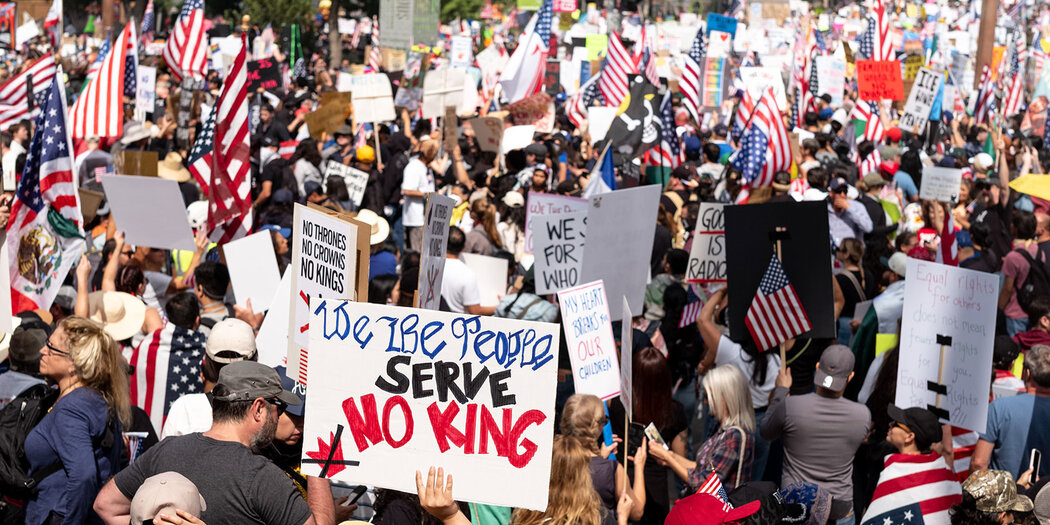

During a police-training webinar, a Flock Safety employee pulled up a hypothetical No Kings protest in Denver and showed how an incident commander could watch it without sending officers into the crowd. The demonstration brought live cameras, license-plate readers, drones, 911 information and police records onto one screen. Nearby building plans and indoor camera feeds were available too.
The September 3 404 Media investigation documented a presentation called “Prepared for Anything: How Cities Prepare for Planned and Unplanned Events.” Flock used a named national protest—not a robbery, missing-person search or stolen car—to demonstrate the reach of its public-safety platform.
The webinar does not establish that Denver police used Flock to monitor an actual No Kings march. It establishes something more specific: Flock presented the remote surveillance of a political demonstration as a normal use of its product and taught police how to do it.
One screen for an entire demonstration
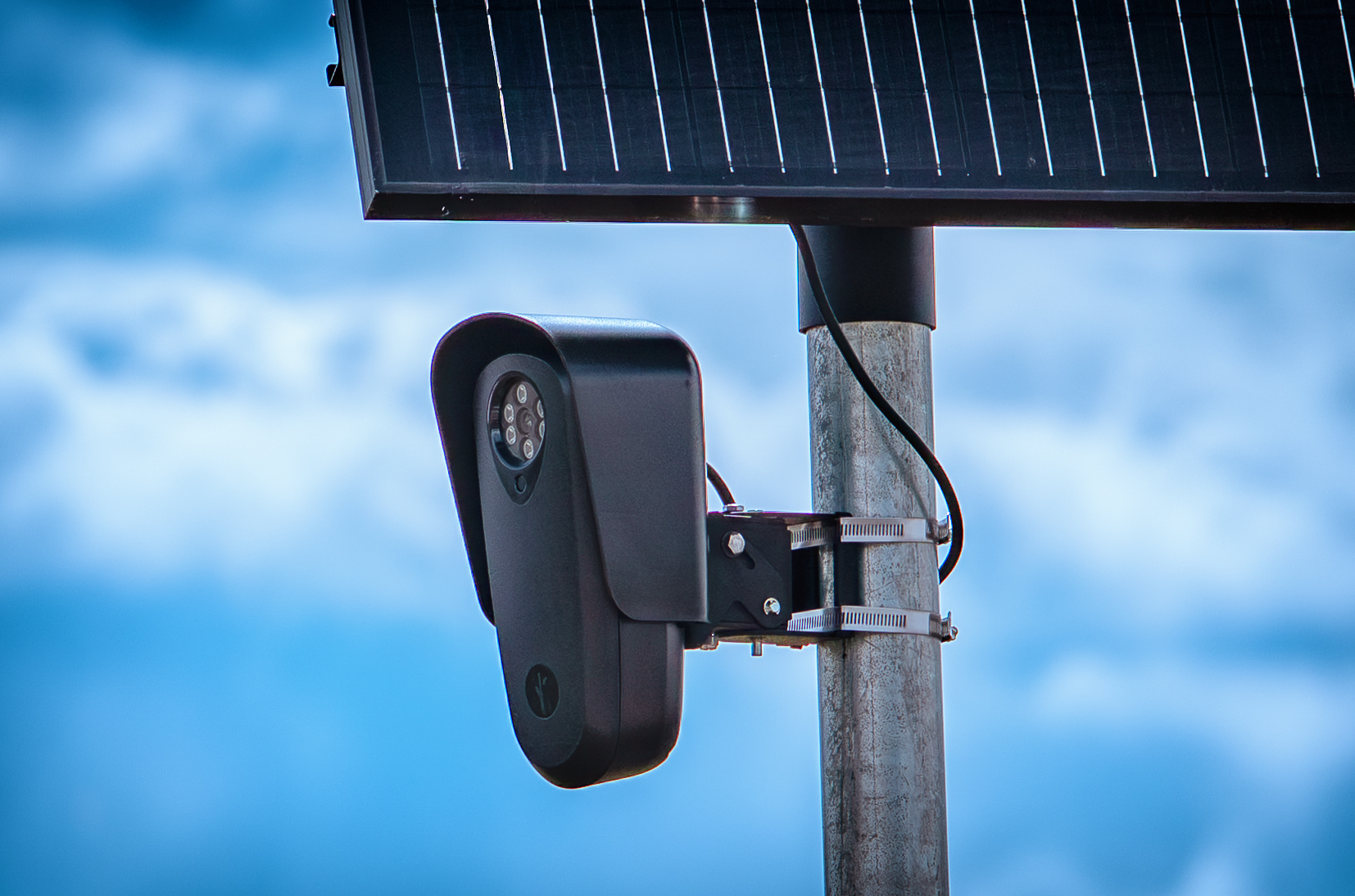
Flock is widely known for automated license-plate readers, the pole-mounted cameras that photograph passing vehicles and make their plates and identifying features searchable. The webinar showed a much larger system. FlockOS can combine those detections with fixed and movable video cameras, drones, gunshot sensors, body-camera footage, dispatch information, records-management systems and cameras operated by other organizations.
The presenter moved through a park where the hypothetical protest would take place, opened response plans and floor plans, and displayed video from outside and inside nearby buildings. Remote monitoring, she explained, could give police a view of the demonstration without officers on the ground attracting attention.
Flock also demonstrated Nova, a search product that draws on categories including names, addresses, email addresses, vehicles, jail records and open-source information. FreeForm, its artificial-intelligence video search, lets a user describe a person, vehicle or scene in ordinary language rather than begin with a known license plate.
Taken together, those products turn a network of roadside cameras into an operating system for following an event: where people gather, which vehicles arrive, what nearby cameras record and what other databases say about a person or car of interest.
“Flock City PD” searched real camera feeds
A second 404 Media investigation, published two weeks later, examined audit logs from a Flock-controlled organization called “Flock City PD.” It was not a real police department. Accounts operating under that name searched cameras belonging to actual communities, including Dunwoody, Georgia, and Bryan, Texas.
The prompts included “crowd,” “large group with signs,” people wearing masks and a person in medical scrubs. Other searches asked the system to find vehicles displaying a Trump bumper sticker, a “coexist” sticker, a Star of David, a “don't tread on me” flag or what one prompt called “religious cars.”
Flock told 404 Media that employees ran the most sensitive searches to test the company's safeguards and to demonstrate queries that users should not conduct. It said Flock City PD was a sales and engineering environment, not a customer investigation, and that the environment has since been isolated from live law-enforcement camera networks.
That explanation is an important limit on what the records prove. The logs do not show a police department opening a case on everyone with a political bumper sticker. They do show company-controlled accounts sending political and religious descriptions through a system connected to real municipal cameras.
What the safeguards allowed
The audit logs also show how Flock's controls worked. Some searches were blocked. Others triggered a warning that the request could implicate First Amendment rights. A user could still proceed, with the search marked for review by a supervisor. Queries for a crowd or a large group carrying signs were allowed.
Flock says that searches are logged and reviewable and that its technology is intended for specific public-safety investigations. Its civil-liberties policies describe auditing as a central protection against misuse.
Logging creates evidence after a search occurs. It does not answer whether the search should have been possible, whether a supervisor will review it or whether a description such as “large group with signs” is sufficiently connected to a crime. WIRED's examination of the FreeForm interface found that departments could configure some searches without requiring a case number or investigative reason, although Flock said stronger controls would become mandatory.
The shift from vehicles to political activity
The two disclosures capture different stages of the same system. The webinar showed Flock teaching police to assemble a real-time view of a political demonstration. The audit logs showed Flock's own accounts testing descriptions of crowds, signs and political or religious symbols against live camera networks.
Neither disclosure proves that every Flock customer uses the platform this way. They make the capability and the company's judgment about its use visible. Monitoring a named protest appeared in official training material. Searching for a large group with signs passed through the product.
For cities buying the system, the oversight question begins before an officer enters a search. It begins when cameras, databases and artificial-intelligence tools are connected closely enough that attendance at a demonstration can become a searchable event.