
FOR IMMEDIATE RELEASE
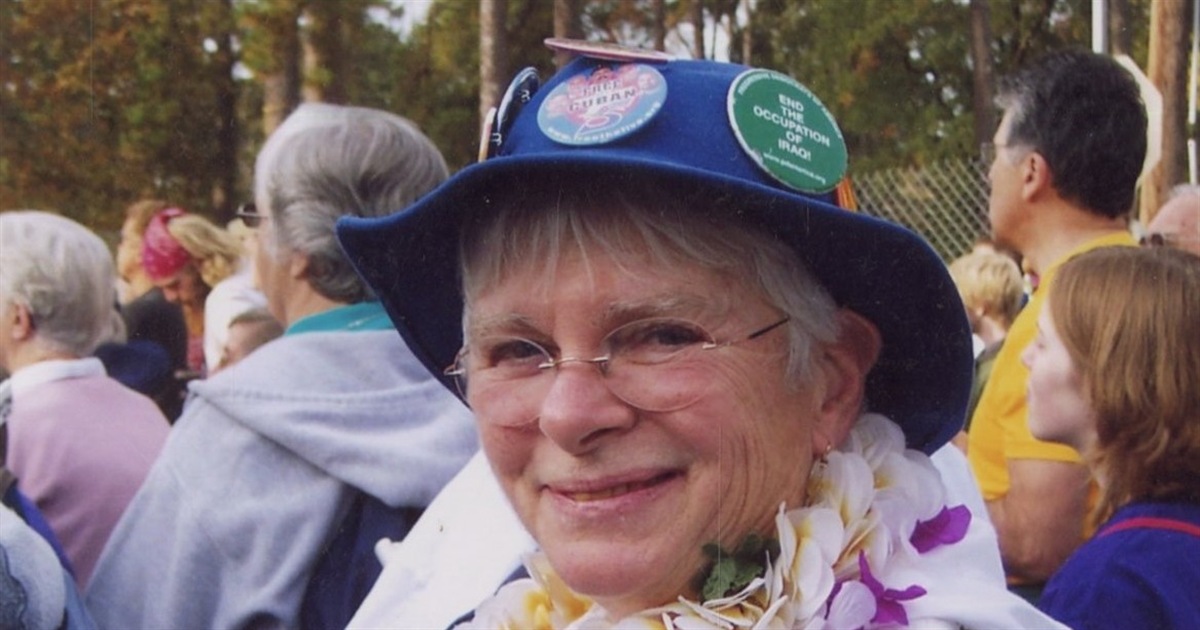
The National Political Prisoner Coalition mourns the death of Paki Wieland, a longtime peace and justice organizer who served NPPC in an advisory role. She died on March 12, 2026, at her daughter’s home in Conway, Massachusetts, after several years of treatment for lung cancer. She was 82.
Paki brought decades of organizing experience to the coalition. Her advice was grounded in the same qualities that shaped her public life: she showed up, listened closely, and stayed involved long after an event or campaign had left the headlines. We remember her here because she was part of NPPC’s work and community.
A lifetime of organizing
Born Patricia Ann Wilson on September 15, 1943, in New Orleans, Paki spent much of her adult life in western Massachusetts. She worked as a social worker and family therapist and taught at the graduate level. She earned a master’s degree in education from Antioch in 1979, a master’s in social work from Boston University in 1986, and a doctor of ministry from the University of Creation Spirituality in 1992.
Her activism reached across many movements and decades. She protested weapons production at L3Harris in Northampton and was arrested more than once for civil disobedience there. She traveled to North Dakota to support opponents of the Dakota Access Pipeline and worked with Massachusetts Peace Action, Western Massachusetts CODEPINK, the Pink House in Washington, the Raging Grannies, the Committee to End the Wars, and Occupy Wall Street.
Even near the end of her life, Paki remained involved. She was helping plan a Western Massachusetts International Women’s Day program when she died.
“She never stopped speaking out”
Representative Jim McGovern, who represents her district, remembered Paki as both a friend and a source of counsel. The two bonded over their arrests for civil disobedience, he said, and he often sought her advice on nuclear disarmament, military contractors, and peace organizing.
“She never stopped speaking out, never stopped organizing, and never stopped challenging the rest of us to live up to our values,” McGovern wrote.
That persistence is what many of us at NPPC will remember. Paki understood that movement work is sustained by people who return to the meeting, the vigil, the courthouse, and the picket line after public attention has moved elsewhere. She did that work for decades, and she encouraged others to keep doing it alongside her.
We extend our condolences to her family, friends, and the many communities she helped bring together.
Paki Wieland served the National Political Prisoner Coalition in an advisory role. NPPC maintains a public archive documenting political imprisonment in the United States from the colonial period to the present.