
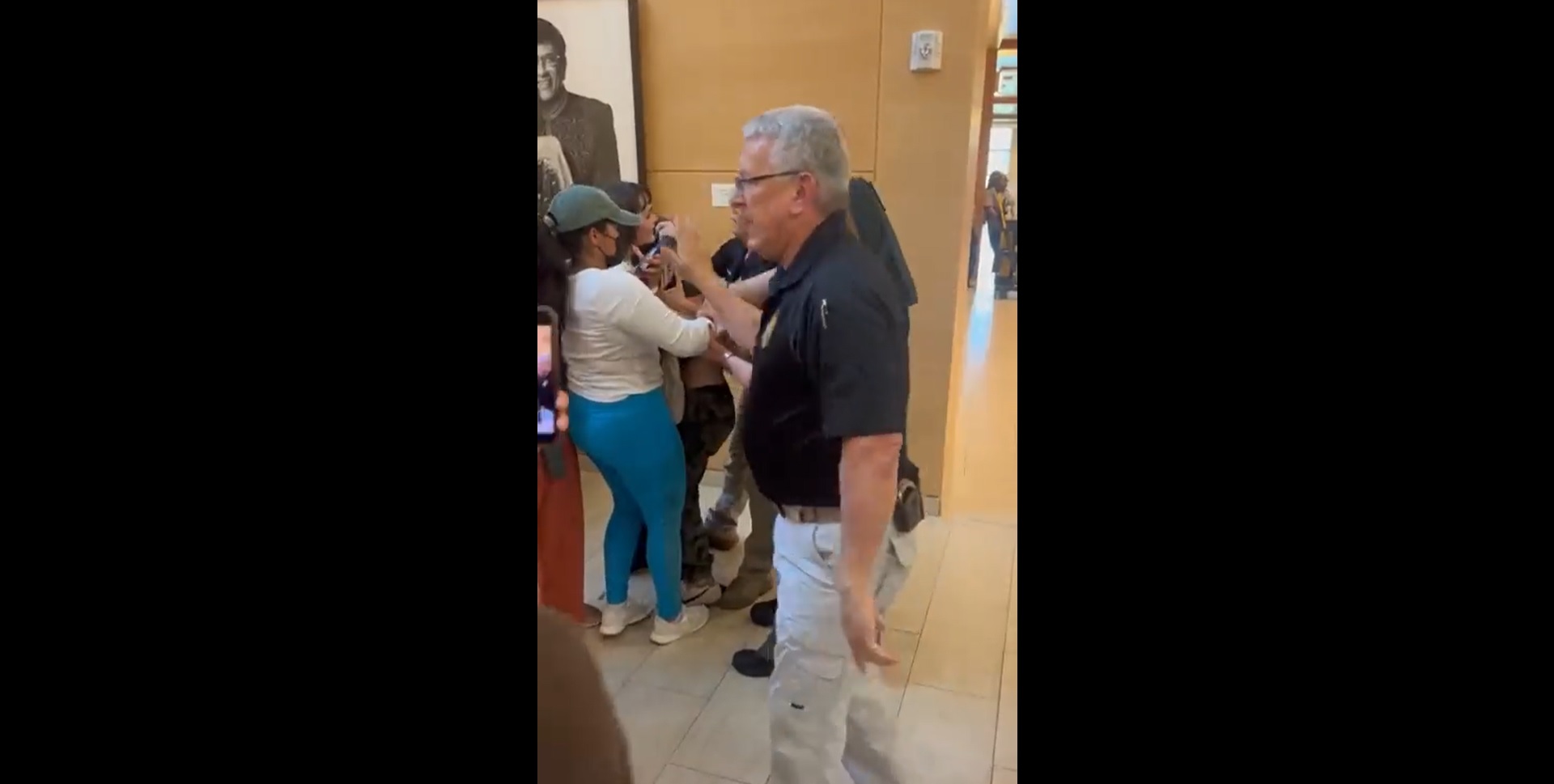
On March 6, 2023, members of the Tampa Bay chapter of Students for a Democratic Society organized a rally at the University of South Florida against proposed restrictions on diversity, equity and inclusion programs. The protest placed campus organizing within a statewide fight over the DeSantis administration’s higher-education agenda, including HB 999 and related legislation.
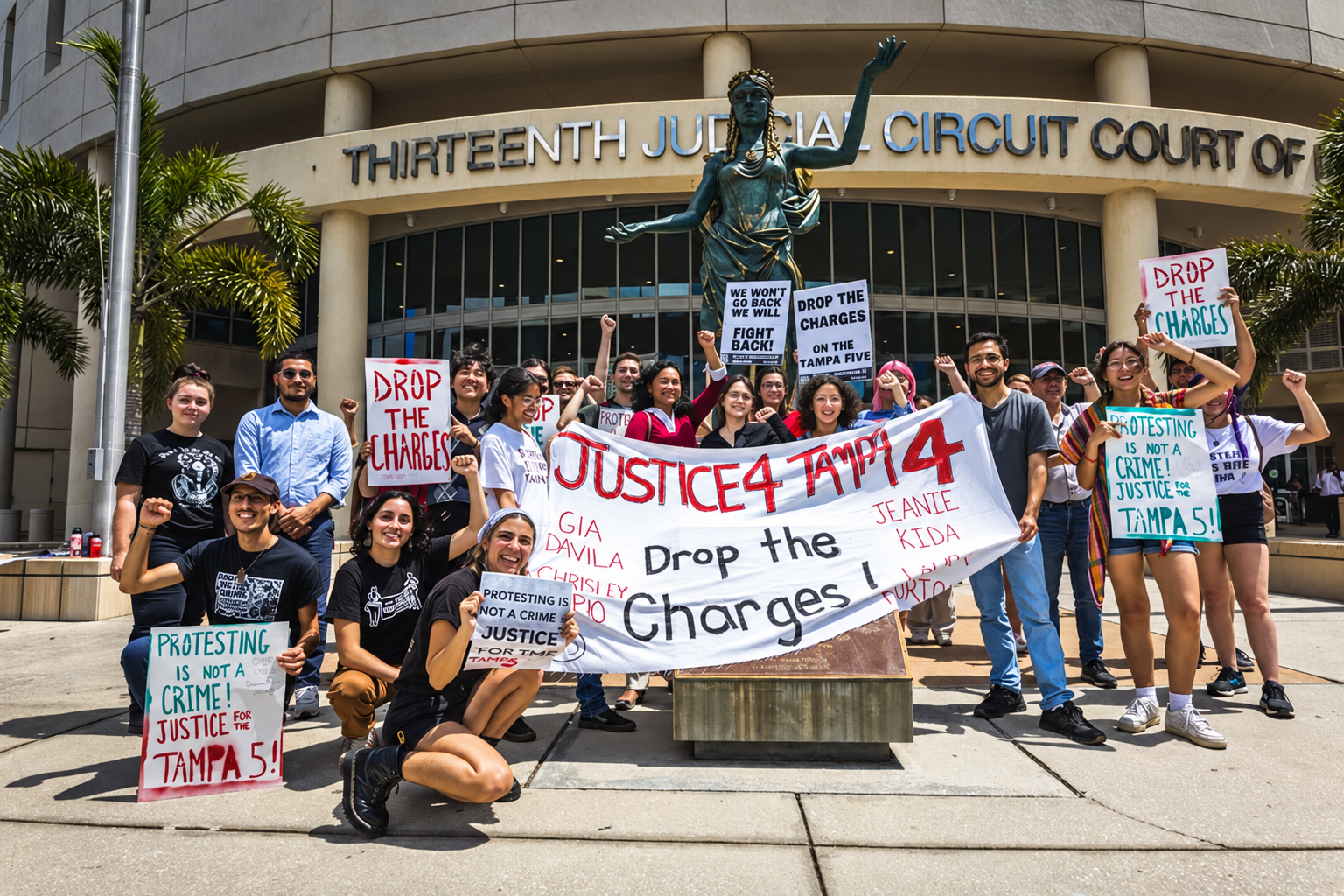
Five people became defendants in the resulting case: Chrisley Carpio, Gia Davila, Jeanie Kida, Laura Rodriguez and Lauren Pineiro. Known to supporters as the Tampa Five, they faced allegations including battery on law-enforcement officers, resisting an officer without violence and disrupting a school or campus function. The felony allegations exposed them to possible prison sentences, transforming a campus protest into a prolonged criminal-defense campaign.
The defendants disputed the police account of the confrontation and maintained that officers used force against demonstrators. Supporters organized protests and a public defense campaign demanding that the charges be dropped. Those assertions must be distinguished from an adjudicated finding: the later agreement did not produce a trial verdict establishing whose account of the confrontation was correct.
On December 5, 2023, the defendants announced an agreement to enter a misdemeanor intervention program. The agreement provided for dismissal upon fulfillment of conditions, including twenty-four hours of community service. It was therefore a conditional resolution, rather than an unconditional dismissal of every charge on the day it was announced. Creative Loafing’s contemporaneous reporting records the distinction between the agreement and the promised dismissal.
The parties described the outcome differently. State Attorney Suzy Lopez’s office presented the program as accountability for the defendants’ actions. The defense emphasized that the agreement did not require guilty or no-contest pleas and protected the defendants from the risk of imprisonment. WUSF’s coverage documented their response and the charges underlying the case.
The legislative context also requires precision. HB 999 was not itself the bill signed into law in May 2023. Its companion, SB 266, became law; the Florida Senate’s legislative record lists HB 999 as laid on the table. SB 266 restricted institutional spending on DEI and certain political or social activism, with provisions taking effect July 1, 2023. Opposition to proposed legislation at the March rally preceded that enactment.
For the National Political Prisoner Coalition, the case raises a broader question about the consequences of charging protest-related confrontations as felonies. Even without a prison sentence, defendants must navigate hearings, legal costs and the possibility of years in custody while organizing a defense. The Tampa Five’s campaign shows how public mobilization and legal representation can alter those stakes. NPPC recognizes the work of the defendants and their supporters, while distinguishing the diversion agreement from an acquittal or a judicial finding of police misconduct.