
A federal appeals court has erased the habeas order that freed Palestinian Columbia University activist Mohsen Mahdawi from immigration detention. The ruling does not decide whether the government retaliated against him for protected speech, and his lawyers say separate protections prevent an immediate arrest or deportation while further review proceeds. It nevertheless removes the district-court judgment that had kept him free and channels his constitutional claims into the slower removal-review process.
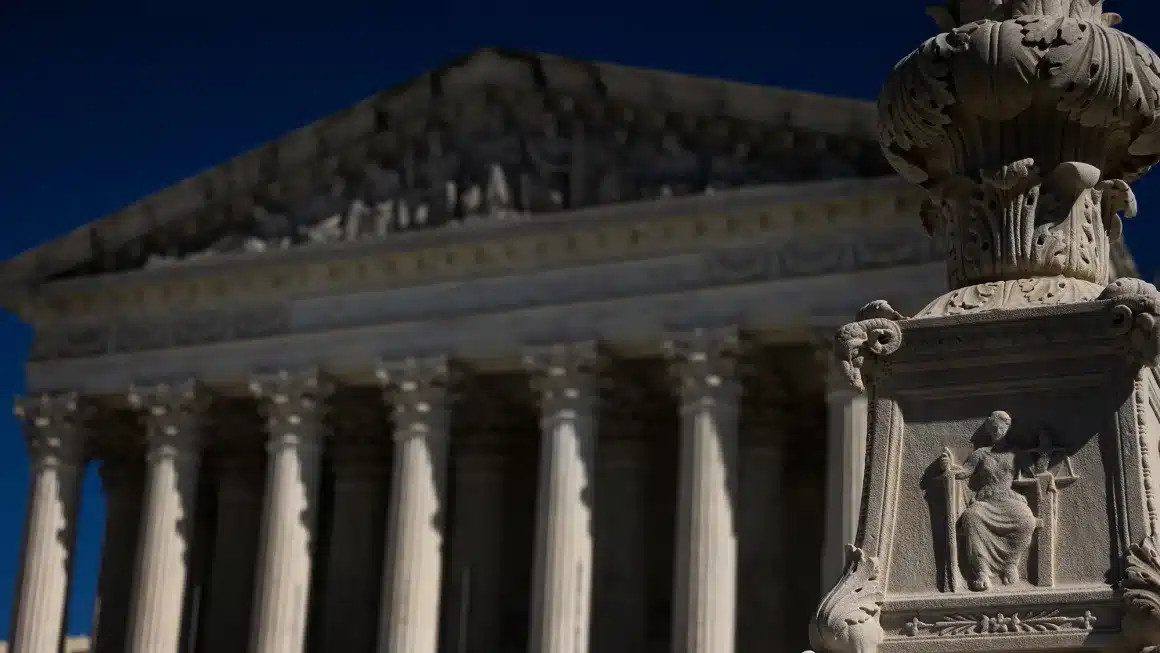
On July 21, 2026, a unanimous panel of the U.S. Court of Appeals for the Second Circuit vacated the April 2025 release order in Mahdawi v. Trump. Judges Debra Ann Livingston, William J. Nardini and Steven J. Menashi held that the federal district court in Vermont lacked jurisdiction to hear Mahdawi's existing habeas case because his claims arose from the government's effort to remove him.
The court sent the case back with instructions to dismiss the petition. Its decision leaves Mahdawi to raise the same constitutional arguments through a petition for review of a final removal order after the immigration process has run its course.
Arrested at a citizenship interview
Mahdawi, a lawful permanent resident who grew up in a refugee camp in the occupied West Bank, had lived in the United States for more than a decade. He helped organize pro-Palestinian demonstrations at Columbia and later stepped away from the campus protest movement. On April 14, 2025, masked immigration agents arrested him at a U.S. Citizenship and Immigration Services office in Colchester, Vermont, where he had arrived for a naturalization interview.
The government placed him in removal proceedings under a rarely used provision of immigration law permitting deportation when the secretary of state determines that a noncitizen's presence could cause potentially serious adverse foreign-policy consequences. Mahdawi's petition said Secretary of State Marco Rubio's determination and the resulting detention punished advocacy for Palestinian rights protected by the First Amendment.
U.S. District Judge Geoffrey Crawford ordered Mahdawi released on April 30, 2025, after 16 days in custody. Crawford found that Mahdawi had made a substantial showing that the arrest was intended to suppress speech with which the administration disagreed. Mahdawi graduated from Columbia soon afterward and remained free while the government appealed.
The Second Circuit decided who may hear the claim, not whether it is true
The appellate opinion rests on 8 U.S.C. § 1252(b)(9), sometimes called the Immigration and Nationality Act's “zipper clause.” The provision funnels legal and factual questions arising from removal into one petition for review after a final removal order. Because Mahdawi asked the district court to invalidate the Rubio determination, stop the government from using protected advocacy as a basis for removal and release him from custody, the panel concluded that the detention claim was inseparable from the removal case.
That procedural holding is narrower than a judgment approving the government's conduct. The panel expressly did not decide whether Mahdawi was selected for detention and deportation because of his speech. The Associated Press reported that Mahdawi was appealing a removal order issued by the Board of Immigration Appeals and could present his retaliation claim to a federal appeals court after exhausting the immigration process.
The distinction also explains the immediate uncertainty around rearrest. Vacating the release order opens a legal path for renewed detention, but it is not itself a warrant directing agents to take Mahdawi into custody. His ACLU lawyers said on the day of the decision that the government could not detain or deport him while the appellate process continued.
A narrowing path for campus-activism cases
The ruling follows the Third Circuit's jurisdictional decision in Mahmoud Khalil's case and arrives as the government continues litigating against other noncitizen campus activists, including Rümeysa Öztürk and Leqaa Kordia. In each case, the practical question is whether a person alleging retaliation must remain exposed to detention while waiting for immigration proceedings to end before an Article III court may review the constitutional claim.
For Mahdawi, the Second Circuit answered that question in the government's favor for this habeas petition. The court preserved a later route to review, but it removed the order that had supplied immediate protection from detention. That gap between a future remedy and a present loss of liberty is why the decision matters beyond one removal case.